How to Feed Sebastopol Geese in Winter
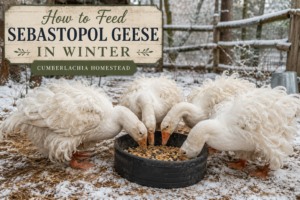
Winter feeding can be one of the biggest concerns for new goose keepers.
During spring and summer, geese spend much of their day grazing on grass, clover, weeds and tender plants. Then winter arrives, the pasture turns brown, snow or ice may cover the ground, and suddenly the flock is standing at the gate staring at you as though you personally canceled salad season.
Here at Cumberlachia Homestead, our mountain property is wooded and does not produce an endless supply of lush grass, even during summer. That means we have to plan carefully for our Sebastopol geese before cold weather settles into East Tennessee.
The good news is that feeding Sebastopol geese through winter does not have to be complicated. The key is providing a balanced waterfowl feed, suitable forage replacements, clean unfrozen water and only a modest amount of high-energy treats.
Do Sebastopol Geese Need More Food During Winter?
Geese may use additional energy during cold weather to maintain their body temperature, especially during prolonged periods of wind, ice and freezing temperatures.
However, that does not mean we should fill their feeders with unlimited corn or scratch grain.
Sebastopol geese are naturally well insulated once fully feathered. Their winter diet should focus on balanced nutrition rather than simply piling on calories.
A goose that becomes overweight may develop leg, foot and reproductive problems. The goal is to keep each goose in healthy body condition while adjusting the amount of feed according to the weather, activity level, age and access to forage.
Make a Complete Waterfowl Feed the Foundation
When grass is limited or unavailable, a nutritionally complete waterfowl feed should become the foundation of the winter diet.
For adult geese that are not laying, look for one of the following:
- Waterfowl maintenance pellets
- All-flock maintenance pellets suitable for geese
- A lower-protein adult waterfowl ration
- A properly formulated goose maintenance feed
Published waterfowl nutrition guidelines list maintenance feed for adult ducks and geese at approximately 14.5 to 16 percent protein. Growing birds require more protein than mature, non-laying geese, so always choose feed according to the bird’s age and life stage.
Because our Sebastopol goslings will still be maturing as they enter their first winter, I will continue monitoring their growth and use an age-appropriate waterfowl grower or maintenance ration based on the manufacturer’s directions.
Avoid relying on ordinary chicken feed unless the label specifically states that it is suitable for waterfowl. Geese require more niacin than chickens, and inadequate niacin is particularly dangerous for growing goslings because it can contribute to leg and joint problems.
Should Feed Be Offered Free Choice?
Some small-flock keepers provide adult maintenance feed free choice, while others offer measured meals.
The best system depends on:
- The size and breed of the geese
- Their body condition
- Whether they are still growing
- How much forage they receive
- The energy content of the feed
- Whether other poultry share the feeding area
Sebastopols are medium-sized geese, but every bird is different. Rather than following a single cup measurement for every flock, watch the birds themselves.
A healthy goose should feel well muscled around the breast without having a sharply prominent keel bone or excessive fat padding.
Check body condition regularly during winter. Increase the complete feed slightly during unusually cold periods when birds are maintaining a healthy weight but appear genuinely hungry. Reduce calorie-dense treats when they begin becoming heavy.
Replace Missing Pasture With Grass Hay
Geese are natural grazers. When fresh grass disappears, good-quality grass hay can help provide forage and keep them occupied.
Suitable options include:
- Timothy hay
- Orchard grass hay
- Mixed grass hay
- Soft meadow hay
- Brome grass hay
Geese generally prefer tender grasses such as orchard grass, timothy, bluegrass, clover and brome over coarse or stemmy forage.
Choose hay that is:
- Fresh smelling
- Green rather than brown or gray
- Soft and leafy
- Free from dust
- Completely free from mold
Never feed moldy hay or grain. Mold-contaminated feed can be extremely dangerous or fatal to poultry and waterfowl.
How to Serve Hay to Geese
Place hay in a low hay rack, basket or clean feeder where the geese can pull pieces through without walking or defecating in it.
You can also place a small amount in a clean rubber feed pan. Remove wet or soiled hay before it begins to spoil.
Some geese immediately investigate hay, while others look at it as though you have served them a bowl of decorative twigs. Introducing it before the pasture disappears may encourage them to recognize it as food.
Long, tough strands can potentially contribute to digestive problems, so soft, shorter grass hay is preferable to extremely coarse hay.
Can Sebastopol Geese Eat Alfalfa Hay?
Alfalfa can provide protein and nutrients, but many geese do not enjoy mature, coarse alfalfa as much as softer grass hay.
Alfalfa is also richer than most grass hays. It should not automatically replace the entire forage portion of an adult goose’s diet.
When using alfalfa, choose soft, leafy hay or plain alfalfa pellets without added molasses, medication or livestock supplements. Pellets should be soaked before serving so they become soft and easier to eat.
At Cumberlachia Homestead, I would use alfalfa as an occasional supplement rather than the primary winter forage.
Using Soaked Grass or Alfalfa Pellets
Soaked forage pellets can be useful when quality hay is difficult to find or the geese waste more hay than they eat.
To prepare them:
- Place a small amount of plain grass or alfalfa pellets in a rubber bowl.
- Add warm water.
- Allow them to soak until completely softened.
- Stir the mixture into a thick mash.
- Serve only what the geese will finish promptly.
Pellets expand significantly, so begin with a small quantity.
Do not leave soaked pellets sitting outside all day. Wet feed can sour, freeze or develop mold. Remove leftovers after feeding and wash the bowl.
Soaked forage pellets are a supplement. They should not replace a complete waterfowl ration.
Fresh Greens for Winter Variety
Store-bought greens can provide enrichment and variety when the pasture is dormant.
Good options include:
- Romaine lettuce
- Kale in moderation
- Collard greens
- Mustard greens
- Turnip greens
- Dandelion greens
- Cabbage
- Chopped broccoli leaves
- Carrot tops
- Wheatgrass grown indoors
Fresh greens provide nutrients including vitamins A and E, riboflavin and calcium.
Hang whole leafy greens from a clean rope or place them in a rubber feed bowl. Hanging greens encourages natural pulling and grazing behavior and can relieve winter boredom.
Greens should supplement the diet rather than replace complete feed.
Avoid feeding slimy, spoiled or moldy produce.
Growing Winter Greens for Geese
Growing trays of fresh grass indoors can be a useful winter project.
Possible choices include:
- Wheatgrass
- Oat grass
- Barley grass
- Ryegrass
Use untreated seed intended for sprouting or animal forage. Avoid lawn seed coated with pesticides, fungicides or other chemicals.
Allow the grass to become firmly rooted before offering the entire tray. Otherwise, a determined goose may inhale the seeds, soil and tray in roughly the time it takes you to say, “Please don’t do that.”
Offer sprouted grass in moderation and watch carefully for mold. Poor airflow, excess moisture and overcrowded seed can quickly turn a promising tray into a fuzzy science experiment.
Can Geese Eat Scratch Grain in Winter?
Scratch grain may be offered as a treat, but it should not become the primary winter diet.
Scratch is not nutritionally complete. Open Sanctuary recommends limiting scratch grains to roughly 10 percent of a goose’s total diet.
A small amount scattered across clean bedding can encourage natural foraging behavior and give the geese something to do.
Suitable grains may include:
- Whole oats
- Wheat
- Barley
- Cracked corn
- A balanced whole-grain poultry scratch
Whole-grain mixtures are generally preferable to feeding plain cracked corn by itself.
During very cold weather, a modest serving of grain in the late afternoon may provide extra energy overnight. However, corn is not a magical internal furnace, and pouring out a mountain of it can dilute the balanced diet and lead to obesity.
Fermented Feed During Winter
Fermented waterfowl feed can still be offered in winter, but it requires careful management.
Serve fermented feed during the warmer part of the day and provide only what the geese will finish quickly. Wet feed can freeze solid in cold weather and become contaminated when left in the bowl.
The mixture should smell pleasantly sour or yeasty, never rotten or rancid.
Keep fermentation containers indoors at a stable temperature. Do not attempt to ferment feed inside a freezing barn or leave wet feed outside overnight.
Dry complete feed should remain available when fermented feed cannot be safely served.
Provide Insoluble Grit
Geese need grit to grind fibrous foods, whole grains and plant material in their gizzards.
Birds with access to soil and small stones may find some naturally. During winter, frozen or snow-covered ground can limit that access.
Provide appropriately sized insoluble poultry grit in a separate container so the geese can take what they need.
Do not confuse grit with oyster shell. Oyster shell supplies calcium, while insoluble granite grit helps grind food.
Geese kept in confinement should receive access to suitable grit because a lack of grit can contribute to digestive problems.
Do Sebastopol Geese Need Oyster Shell?
Adult female geese entering or actively in laying season may need supplemental calcium.
Offer oyster shell in a separate dish rather than mixing it into the entire flock’s feed. This allows laying females to consume it according to their needs without forcing males and non-laying birds to eat unnecessary calcium.
Young goslings and non-laying adult geese should receive their calcium through an appropriately balanced complete ration unless an avian veterinarian recommends otherwise.
Fresh Water Is Essential, Even in Winter
Geese must always have access to clean drinking water that is not frozen.
Their water should be deep enough for them to submerge and rinse their entire bill and nostrils.
This does not mean they need access to a swimming pool during freezing weather. Drinking and bill-rinsing water is essential; winter swimming is optional and requires careful supervision.
Check water several times each day during freezing temperatures. Heated poultry waterers, heated rubber bowls or safe heated bases can reduce ice, but electrical equipment must be rated for outdoor or barn use and protected from water, curious bills and chewing animals.
Responsible winter goose care includes providing clean water that does not freeze.
Place the waterer over a drainage platform, gravel area or rubber mat to keep bedding from becoming saturated.
Wet bedding creates cold, mud and ice. With Sebastopols, it can also turn those beautiful curling feathers into frozen little ropes.
Keep Feed and Water Away From Wild Birds
Winter often brings wild birds closer to poultry feeders because natural food is scarce.
Feed domestic geese inside a covered enclosure when possible, clean spills promptly and keep feeders and waterers protected from wild birds.
Waterfowl can carry avian influenza without always appearing ill. University of Minnesota Extension recommends enclosing feeding areas, cleaning spills and separating domestic poultry from wildlife and wild birds.
Because we have a creek and abundant wildlife at Cumberlachia Homestead, this is especially important during wild-bird migration and winter feeding season.
Foods to Avoid
Do not feed Sebastopol geese:
- Moldy grain, hay or pellets
- Spoiled fruits or vegetables
- Heavily salted food
- Large amounts of bread
- Sugary baked goods
- Chocolate
- Avocado
- Caffeinated food or beverages
- Alcohol
- Raw dried beans
- Green potato skins or sprouts
- Food treated with pesticides
- Livestock feed containing medication not approved for geese
Bread may fill a goose’s stomach without providing balanced nutrition. A tiny piece is unlikely to cause disaster, but it should not become a regular winter food.
Watch Their Condition Throughout Winter
Winter feeding should be adjusted according to the birds rather than the calendar alone.
Watch for:
- Unexplained weight loss
- A sharply prominent breastbone
- Weakness or reluctance to walk
- Swollen leg joints
- Reduced appetite
- Excessive weight gain
- Labored movement
- Poor feather condition
- One goose being pushed away from the feeder
- Unusual droppings
Provide more than one feeding station when a dominant goose prevents another from eating.
Sebastopol feathers can make body condition harder to judge visually. Use your hands to feel the breast and body beneath the curls.
A goose can look like an enormous feather duster while hiding a surprisingly lean frame underneath.
Our Cumberlachia Homestead Winter Feeding Plan
For our four Sebastopol geese, our basic winter routine will look something like this:
Morning
- Fresh complete waterfowl feed
- Clean, unfrozen drinking water
- A small serving of fresh greens or soaked forage pellets
During the Day
- Access to soft grass hay
- Insoluble grit in a separate container
- Safe outdoor exercise when weather permits
- Fresh water checks throughout the day
Late Afternoon
- More complete feed as needed
- A small amount of whole grain during especially cold weather
- A final water and bedding check before dark
The exact portions will be adjusted according to their age, body condition, weather and how much natural forage remains available.
Final Thoughts
Feeding Sebastopol geese in winter is mostly about replacing what the dormant pasture can no longer provide without unbalancing their diet.
Start with a complete waterfowl ration. Add quality grass hay, modest amounts of fresh greens and occasional soaked forage pellets. Offer scratch grain sparingly, provide grit and keep clean drinking water from freezing.
Most importantly, watch the geese themselves.
Their appetite, weight, movement and feather condition will tell you whether your winter plan is working.
With a little preparation, your geese can remain healthy and content through the cold months, even when the pasture is brown, the creek edges are icy and the entire flock is standing beside the gate demanding room service.
That is winter at Cumberlachia Homestead: frozen buckets, curly geese and a feed scoop that never gets the season off.
This article shares our homestead practices and is intended for general educational purposes. Consult an avian veterinarian or qualified poultry nutrition professional when a goose has unusual weight loss, leg problems, illness or specialized dietary needs.
Be the first to comment