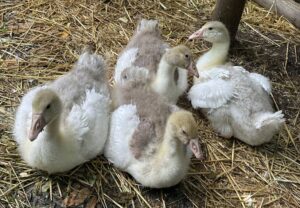
Sebastopol Geese: What They Are
Sebastopol’s are medium-sized ornamental geese known for long, curled, soft feathers on the body, wings, and tail. Mature ganders average about 14 lb and geese about 12 lb. Their curled feathers can nearly touch the ground, which is gorgeous but also means they get dirty, wet, or matted more easily than smooth-feathered geese.
They are generally known for being calmer and more people-friendly than many goose breeds, making them a good fit for a homestead where they’ll be seen, handled, and possibly featured in content.
The Big Picture
For your setup in East Tennessee, I’d raise them like this:
0–6 weeks: warm, dry brooder with waterfowl feed and niacin.
6–12 weeks: protected grow-out pen with grass access.
12+ weeks: secure goose house at night, fenced pasture by day.
Adult life: pasture, clean water, predator-proof shelter, seasonal breeding management.
Brooding Sebastopol Goslings
Goslings are hardy, but they are messy little water-powered bulldozers.
For four goslings, start with at least 6 square feet total, but bigger is better because waterfowl soak bedding fast. Missouri Extension recommends about 1.5 square feet per bird in the brooder and about 4 inches of absorbent litter. Damp bedding is one of the biggest problems with goslings, so remove wet spots often and add clean bedding frequently.
Best brooder setup:
Use a large stock tank, kiddie pool, or secure brooder box. Keep one warm side and one cooler side so they can self-regulate. Start around 90°F, then reduce by about 5°F weekly as long as they are comfortable. Watch the birds more than the thermometer: huddled means cold, panting and avoiding heat means too hot.
For bedding, I would use:
Best: pine pellets with a textured top layer or towels for the first few days.
Okay: large-flake pine shavings after they know what feed is.
Avoid: slick newspaper, cedar shavings, moldy straw, or dusty bedding.
Because Sebastopol’s have fancy feathering later, you want to train yourself early: dry bedding is health care.
Water for Goslings
They need water deep enough to dip their bills and clear their nostrils, but not so deep they can climb in and chill. Goslings use water to digest food and clean their nares, so constant fresh drinking water is important.
Use a chick waterer at first, then move to a deeper dish with stones or a guard so they can dunk bills but not bathe in it.
Do not let young goslings swim unsupervised before they are well-feathered. They can chill fast.
Feed and Niacin
This is huge: goslings need more niacin than chicks. A plain chick starter may not be enough unless supplemented. A waterfowl starter is best. Merck lists goose starter protein around 20% from 0–4 weeks, then about 15% after 4 weeks.
Best feed plan:
0–4 weeks: waterfowl starter or unmedicated chick starter plus niacin support.
4–12 weeks: waterfowl grower or flock raiser.
12+ weeks: pasture plus maintenance feed.
Breeding season: breeder/layer-style ration with calcium available.
A practical niacin option is brewer’s yeast added to feed. MOFGA notes that goslings and adult geese need niacin and recommends waterfowl/game bird feed or supplementation, such as brewer’s yeast.
Also provide chick-sized grit if they eat grass, greens, or treats.
Greens and Pasture
Geese are grazing machines. Once they are a few days old, you can offer finely chopped grass, dandelion greens, clover, plantain, chickweed, and safe garden greens — but always with grit.
Do not feed lots of spinach, iceberg lettuce, salty foods, bread, moldy feed, or heavy scratch grains to young goslings.
For your farm, they’ll love:
Dandelion greens
Plantain
Clover
Fresh grass
Lettuce
Comfrey only sparingly, not as a main feed
Garden weeds you know are safe
Housing for Adult Sebastopol’s
Geese do not need roosts. They sleep on the ground. They also usually do not need raised nest boxes; they prefer ground nests with straw or hay in quiet corners.
For four adult Sebastopol’s, I’d build or dedicate a goose house around:
Minimum: 16–24 square feet
Better: 32+ square feet
Door: wide and low, no steep ramp
Floor: dirt, wood, or concrete with deep bedding
Bedding: straw or pine shavings/pellets
Ventilation: excellent, but no cold draft at bird level
Ventilation matters. Goose housing needs good airflow to prevent respiratory and moisture problems.
Because Sebastopol’s have long curly feathers, I’d keep their night house extra dry. Wet, muddy housing will ruin feather quality and can invite skin/foot problems.
Fencing and Predator Protection
Geese are loud alarms, but they are not predator-proof. Raccoons, coyotes, foxes, dogs, bobcats, owls, and even snapping turtles around ponds can be problems.
For daytime:
Use 4-foot woven wire or poultry netting. Electric netting is excellent if maintained. Give them a grass run or rotational paddocks.
For nighttime:
Lock them in a secure house. Use hardware cloth, not chicken wire, on openings. Use raccoon-proof latches. Predators in East Tennessee are not playing around — they shop after dark.
Water: Pond or No Pond?
They do not need a pond, but they do need bathing water.
A kiddie pool, mortar tub, or shallow stock tank works well. For Sebastopols, a clean kiddie pool is often better than a muddy pond because those curly feathers collect grime.
Best approach:
Fresh drinking water daily
Bathing tub several times per week
Dump and move tub often to prevent mud pits
Put gravel or pavers around the water station
Sebastopol Feather Care
Their beauty is also their weakness.
The curly feathers can:
Hold mud
Stay wet longer
Break more easily
Reduce flight ability
Make them less weatherproof than smooth geese
So your management should focus on:
Dry shelter
Clean bedding
Clean bathing water
Good drainage
Avoiding deep mud
Extra winter wind protection
In cold rain, I’d make sure they can get into a dry shelter. They are hardy, but wet curls plus wind is not ideal.
Integrating With Chickens, Ducks, Quail, Rabbits
I would not house them full-time with your silkies, quail, or rabbits.
Reasons:
Geese are wet and messy.
They can bully smaller birds.
They need different water/feed management.
They may trample delicate birds.
Rabbits need dry, calm housing.
They can share pasture areas nearby, but I’d give the geese their own night shelter and fenced area.
Temperament and Handling
Handle them daily while young. Sit with them, hand-feed greens, speak calmly. Geese imprint strongly on routine.
Do:
Move slowly
Use the same call or bucket routine
Hand-feed healthy greens
Train them to go in at night
Do not:
Chase them
Let kids or dogs frighten them
Grab by wings, legs, or neck
Let ganders learn they can push you around
A friendly gosling can become a spicy adult gander if boundaries are not set early. Think “sweet toddler with a leaf blower.”
Male/Female Ratio
With four goslings, you may end up with mixed sexes. Best adult ratio is usually:
1 gander to 2–4 geese
If you end up with multiple ganders and few females, breeding season may bring fighting or overbreeding. Watch closely in spring.
Breeding and Eggs
Sebastopols are seasonal layers, usually spring. They may lay ground nests in straw. If you want goslings later, you’ll need clean nests, good nutrition, and predator protection.
Breeding birds need more calcium than growing birds; Merck’s nutrient table lists breeding goose calcium much higher than starter/grower diets.
Offer oyster shell free-choice to adult females when laying.
Health Concerns
Common things to watch:
Niacin deficiency: weak legs, bowed legs, reluctance to walk
Angel wing: often linked to overly rich feed/too much protein and rapid growth
Bumblefoot: wet, rough, or dirty ground
Respiratory issues: damp, ammonia-heavy housing
Parasites: especially if on wet ground
Predator injuries
Heat stress in summer
Waterfowl can also face serious diseases such as goose parvovirus in young goslings; MSD/Merck notes it can spread through eggs and feces, and prevention focuses on breeder vaccination because there is no treatment.
For your farm, quarantine new goslings away from other birds for at least 2–4 weeks, especially since you already keep multiple species.
Summer and Winter in East Tennessee
Summer
Sebastopols need shade, airflow, and cool water. Heat stress is more dangerous than cold. Give them shade cloth, trees, or open-sided shelter.
Winter
They can handle cold if dry and out of wind. Deep straw bedding is good. Avoid sealed-up housing; moisture is worse than cold.
Best Housing Plan for Your Four
Here’s what I’d build:
A small goose house, about 4 ft x 8 ft or larger.
Attached predator-safe run, at least 200–400 square feet.
Rotational grazing area when supervised or fenced.
Kiddie pool on gravel.
Separate feed station under cover.
Deep dry bedding.
Hardware cloth ventilation.
Wide ground-level door.
That setup would be practical, pretty, and video-worthy for Cumberlachia Homestead 🪿📸.
My Ideal Daily Routine
Morning: let them out, refresh water, check feet/legs, feed.
Midday: pasture/grazing, shade, pool access.
Evening: feed lightly if needed, herd into house, lock up.
Weekly: dump pool, rake mud spots, add bedding, check fencing.
Monthly: inspect feet, feathers, body condition, and parasite signs.
Bottom Line
Sebastopol geese are a great fit for your homestead if you manage them as ornamental grazing waterfowl, not just “big ducks.” The secrets are simple:
Dry bedding
Waterfowl feed with niacin
Clean bathing water
Predator-proof housing
Good grass access
Separate housing from smaller animals
Consistent handling from day one
They’ll add beauty, noise, personality, and probably a little soap-opera drama to the farm — which, honestly, is premium homestead content. 🪿🌄